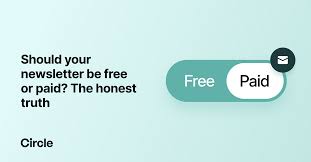
A paid newsletter offers exclusive content or benefits for a subscription fee, while a free newsletter is typically supported by ads or offers general content. The choice depends on your desire for premium information, community access, and budget.
Paid Newsletter vs Free Newsletter: What’s the Big Difference?
At its heart, the main split between a paid newsletter and a free one is about money. One asks you to open your wallet. The other asks for your email address and maybe shows you some ads.
But it’s more than just the price tag. The value and the kind of experience you get can be quite different.
Think about it like this: a free newsletter is like a public park. Anyone can wander in, enjoy the space, and see what’s there. It’s open to all.
A paid newsletter is more like a private club or a special exhibit. You need a ticket or a membership to get in. This ticket lets you access things not available to the general public.
This difference in access leads to many other distinctions. It affects the type of content you receive. It changes the community you might become a part of.
It even impacts how the people running the newsletter operate. Let’s dive into what makes each unique.
What You Get with a Free Newsletter
Free newsletters are everywhere. They are super common. You sign up for them because you want to learn something new.
Or maybe you just like the topic. They’re a great way to get regular updates without spending any cash.
Many businesses use free newsletters to talk to their customers. They share news about their products. They offer tips and tricks.
Sometimes they give out discount codes. This helps them stay in touch and sell more things. It’s a win-win when it works well.
Content in free newsletters can be broad. It covers many subjects. You might get weekly roundups of interesting articles.
You could find DIY project ideas. Or perhaps daily news briefs. The goal is usually to build an audience.
They want to keep you coming back for more.
Often, free newsletters are supported by advertising. Businesses pay to have their ads shown. This is how the newsletter creator makes money.
It means you might see ads for other products or services. The ads are usually related to the newsletter’s topic. This helps them feel less out of place.
Another way free newsletters make money is through affiliate marketing. The newsletter writer might talk about a product. If you buy it using their special link, they get a small payment.
This is common for reviews or recommendation lists.
Building trust is key for free newsletters. They want you to like what they send. If you enjoy it, you might tell friends.
Or you might click on an ad. Or buy something through their link. They aim to provide enough value so you stay subscribed.
What You Get with a Paid Newsletter
Paid newsletters are different. They ask you to pay. This fee is usually a monthly or yearly amount.
What you get in return is often more focused and in-depth. The creators are being paid directly by you. This changes things.
The content in paid newsletters is usually premium. It’s not something you can find anywhere else for free. Creators put more effort into it.
They might do deep research. They could offer expert analysis. Sometimes they share personal insights they don’t share elsewhere.
Imagine a writer who is an expert in a certain field. They might have years of experience. They have learned a lot.
A paid newsletter is where they share their best knowledge. They don’t give this away for free. It’s their special skill.
You pay to tap into that knowledge base.
Many paid newsletters focus on a niche topic. This means they go deep. They don’t just skim the surface.
They might talk about stock market trends. Or the latest in AI development. Or creative writing techniques.
The audience for these newsletters is usually very interested in that specific subject.
The community aspect can also be stronger with paid newsletters. Because everyone has paid to be there, they are often more invested. Creators might set up private forums or chat groups.
This lets subscribers talk to each other. They can share ideas. They can ask questions.
It creates a sense of belonging.
Paid newsletters often have fewer or no ads. Since the money comes from subscribers, they don’t need to rely on advertisers. This means your reading experience is usually cleaner.
You won’t be interrupted by promotional messages as much. The focus stays on the content you paid for.
The creators of paid newsletters are often more accountable to their subscribers. They want to keep you paying. So, they listen to feedback.
They try to make the content even better. You are their main customer. Your satisfaction is very important.
My Own Newsletter Journey: From Free to Paid
I remember when I first started getting into newsletters. It was all about “free” for me. Why pay when there’s so much out there for free?
I signed up for dozens. My inbox quickly became a mess. I got updates on everything under the sun.
Some were okay. They gave me a quick laugh or a fun fact. Others were just noise.
They felt like they were trying to sell me something all the time. I’d scroll through them quickly. I rarely clicked on anything.
It felt like a waste of my scrolling thumb.
Then, I found a writer I really admired. They wrote about design. Their free articles were great.
They were insightful and clear. I learned a lot from them. I started looking for more from them.
That’s when I saw they had a paid newsletter.
I was hesitant at first. “Pay money for an email?” I thought. But I thought about how much I enjoyed their free stuff.
I thought about how much I learned. I decided to give it a try. It was a small monthly fee.
It felt like buying a coffee.
The first issue of their paid newsletter arrived. It was different. It was longer.
It had more detailed examples. There were behind-the-scenes looks at their projects. There was a section where they answered subscriber questions.
It felt like I was getting real insider knowledge.
I realized that the creator had spent much more time on this. They weren’t just sharing quick thoughts. They were crafting something valuable.
And because I paid, I paid more attention. I read every word. I saved the issues I liked best.
That experience changed how I looked at newsletters. Free is good for general info. But for real depth and specialized knowledge, paid can be worth every penny.
It’s about what you’re looking for and how much you value that specific information.
Quick Look: Free vs. Paid Newsletter Value
Free Newsletter Perks:
- Cost: Absolutely free.
- Content Scope: Usually broad or introductory.
- Audience Building: Aimed at a wide audience.
- Support Model: Ads, affiliate links, or brand promotion.
- Reading Experience: Can include ads and promotional material.
Paid Newsletter Perks:
- Cost: Subscription fee (monthly/yearly).
- Content Scope: Deep dives, exclusive insights, expert analysis.
- Audience: Niche, highly engaged subscribers.
- Support Model: Direct subscriber payments.
- Reading Experience: Cleaner, focused on premium content, often ad-free.
The Content Difference: Depth vs. Breadth
One of the most significant differences between paid and free newsletters is the content itself. This is often where the value really lies for the reader.
Free newsletters tend to focus on breadth. They want to cast a wide net. The content might be general news updates.
It could be curated links from around the web. Or quick tips and tricks. The goal is to keep you engaged enough to stay subscribed.
It’s about providing a consistent stream of accessible information.
For example, a free marketing newsletter might share the top five marketing news stories of the week. It might link to a few popular blog posts. It might have a quick tip on social media.
It’s useful for staying generally informed. But it probably won’t tell you a brand-new strategy you can implement right away that your competitors don’t know about.
Paid newsletters, on the other hand, excel at depth. They go much deeper into specific topics. The creators are paid for their expertise.
They invest more time and effort into researching and writing. You’re paying for their unique perspective and detailed analysis.
A paid marketing newsletter might feature an in-depth case study of a successful campaign. It could include interviews with industry leaders. It might break down a complex marketing funnel step-by-step.
It could offer actionable advice tailored to specific business types. The focus is on providing truly unique and valuable insights that aren’t readily available elsewhere.
This difference in content often means paid newsletters are about learning a skill. Or understanding a complex subject really well. Or getting an edge in a competitive field.
Free newsletters are more about staying aware. They keep you in the loop. They offer good foundational knowledge.
Content Focus: A Visual Contrast
Free Newsletters
Breadth: Wide topics, general overview.
Examples: Weekly news roundups, curated links, quick tips.
Goal: Stay informed, general interest.
Paid Newsletters
Depth: Niche topics, expert analysis.
Examples: Deep dives, case studies, exclusive interviews, actionable strategies.
Goal: Gain advantage, master a skill, exclusive knowledge.
The Community Factor: Who You’re Connecting With
The people who subscribe to a newsletter also shape the experience. This is especially true when it comes to community.
With free newsletters, the audience is usually very diverse. Anyone can sign up. This means you’ll find people at all stages of interest.
Some might be beginners. Others might be experts. You might find people who are just casually browsing topics.
The community aspect in free newsletters is often limited. You might get a link to a social media group. Or a website forum.
But direct interaction with the creator might be minimal. And interaction with other subscribers can be less structured.
Paid newsletters often cultivate a stronger sense of community. Because everyone has paid to be part of it, subscribers are usually highly invested. They are serious about the topic.
They want to learn and contribute.
Creators of paid newsletters often make an effort to foster this community. They might have private Slack channels. Or Discord servers.
Or dedicated forums on their website. These spaces are for subscribers to connect with each other. They can ask questions.
They can share their own experiences. They can network with like-minded people.
I’ve seen paid newsletters where the subscribers are almost as valuable as the content itself. People share job opportunities. They offer feedback on each other’s work.
They form collaborations. This happens because everyone is in the same “boat.” They all see the value and are willing to invest time and money.
This community can be a huge draw for paid newsletters. It’s not just about the words on the page. It’s about being part of a group of people who share your passions and goals.
This can accelerate your learning and professional growth in ways that a free newsletter simply can’t match.
The Creator’s Perspective: Motivation and Sustainability
Understanding why a newsletter is free or paid also sheds light on the creator’s motivation.
For free newsletters, motivation can be varied. It could be to build a brand. It could be to drive traffic to a website.
It could be to generate leads for a business. Or simply to share knowledge and build an audience for future opportunities (like writing a book or speaking at events).
Sustainability for free newsletters comes from external sources. This means ads, sponsorships, or sales from a related business. This model can work well for large audiences.
But it can also mean the content needs to appeal broadly. It might also mean the creator has less direct control over their income. They depend on advertisers or a parent company.
For paid newsletters, the motivation is often much more direct. The creator is providing a service that people are willing to pay for. They want to earn a living by sharing their expertise.
This direct relationship with subscribers can be very fulfilling.
Sustainability for paid newsletters comes from subscriber loyalty. The creator needs to consistently deliver value. They need to keep their subscribers happy so they renew their subscriptions.
This model gives the creator more autonomy. They can focus purely on the content and the needs of their paying audience. They don’t have to worry as much about pleasing advertisers.
This can lead to more authentic and focused content in paid newsletters. The creator isn’t beholden to anyone but their subscribers. They can tackle sensitive topics.
They can offer honest opinions. They can experiment more. This often results in a higher level of trust and engagement with the audience.
Creator Motivation Snapshot
Free Newsletter Creator
Primary Goal: Build audience, brand awareness, leads, traffic.
Sustainability: Ads, sponsors, affiliate sales, business promotion.
Content Focus: Broad appeal, consistent flow.
Influences: Advertisers, broad audience needs.
Paid Newsletter Creator
Primary Goal: Earn income, share expertise directly.
Sustainability: Subscriber fees, renewals.
Content Focus: Deep, niche, high-value insights.
Influences: Paying subscribers’ needs and feedback.
When Is a Free Newsletter the Right Choice?
So, when does a free newsletter make the most sense for you? It’s all about what you need and what you’re looking for.
You want general updates. If you just want to stay loosely informed about a topic, a free newsletter is perfect. You don’t need every detail.
You just want to know what’s happening. Think of it as a quick scan of the headlines.
You’re just starting to learn. If you’re new to a subject, free newsletters can be a great starting point. They offer introductory information.
They can help you understand the basics. You can explore different aspects of the topic without committing any money.
You have a tight budget. This is obvious, but important. If you can’t afford to spend money on subscriptions, free is your only option.
There are tons of high-quality free newsletters out there. You can still learn a lot.
You don’t want another commitment. Signing up for a paid newsletter is a commitment. You expect value in return.
If you don’t want that pressure, or you don’t want to manage another recurring payment, free is the way to go.
You want a variety of sources. You can subscribe to dozens of free newsletters. This lets you get different viewpoints.
You can see how various creators cover the same topic. This broad exposure can be very helpful when you’re exploring.
I often use free newsletters for topics where I want a general awareness. For example, I get a few free newsletters about general tech news. They tell me about big product launches or industry trends.
I don’t need to know the exact technical details. I just need to know that it happened and why it’s important. That’s what free newsletters are great for.
When Is a Paid Newsletter the Right Choice?
Now, let’s look at when a paid newsletter truly shines. This is when you’re looking for something more.
You need specialized knowledge. If you need to master a specific skill or understand a complex field, paid is often the way to go. The depth and detail you get are usually unmatched in free offerings.
You value expert insights. When you want to learn from someone who has spent years mastering their craft, you pay for that experience. Paid newsletters are where these experts often share their most valuable lessons.
You want a strong community. If connecting with like-minded people is important to you, a paid newsletter can provide that. The curated community of engaged subscribers is a big draw.
You want an ad-free experience. If you dislike ads and want to focus solely on the content you’re interested in, a paid newsletter usually delivers this. The focus is on delivering value directly to you.
You want to support creators directly. If you really appreciate a particular writer or creator and want to support their work financially, a paid subscription is the most direct way to do it. You’re funding the content you love.
You’re looking for a competitive edge. In many professional fields, having access to insider information or advanced strategies can make a big difference. Paid newsletters often provide this edge.
I pay for a newsletter that gives me deep insights into a specific area of my work. It helps me make better decisions and stay ahead of trends. The cost is minimal compared to the potential benefit.
Making Your Decision: What’s Your Goal?
Deciding between a paid and free newsletter isn’t about which one is “better.” It’s about which one fits your personal goals and needs right now.
Ask yourself these questions:
- What am I trying to achieve by reading newsletters?
- Do I need a broad overview, or do I need deep, specific knowledge?
- How much time and money am I willing to spend on information?
- Is community interaction important to me?
- Do I want to directly support the creators I value?
If you’re just dipping your toes into a new subject, start with free. See what you like. See what kind of content resonates with you.
There are so many great free options available that you can explore widely.
If you find yourself consistently seeking more depth from a particular source, or if you identify a need for specialized knowledge that free sources can’t provide, then exploring paid options is a logical next step. Look for newsletters from experts you trust. Read reviews.
See if they offer a trial period.
It’s also okay to have both! Many people subscribe to a few free newsletters for general updates. They also have one or two paid newsletters for their most important topics.
This gives them the best of both worlds.
Navigating the Landscape: Tips for Choosing
No matter if you’re leaning towards free or paid, here are some tips to help you make good choices.
For Free Newsletters:
- Be selective. Don’t sign up for everything. Your inbox will thank you. Pick a few that really interest you.
- Use filters. Set up email filters to move newsletters into specific folders. This keeps your main inbox clean.
- Unsubscribe often. If you’re not reading it, or it’s not giving you value, hit unsubscribe. It’s easy and free!
- Look for reputable sources. Stick to newsletters from known experts or trusted publications.
For Paid Newsletters:
- Look for trials. Many paid newsletters offer a free trial period. Use this to see if the content is worth the cost.
- Read reviews. See what other subscribers are saying about the quality and value.
- Consider the creator’s experience. Does the creator have strong E-E-A-T (Experience, Expertise, Authoritativeness, Trustworthiness) in the subject?
- Understand the commitment. Know if it’s a monthly or annual fee. Make sure it fits your budget.
- Check for community features. If community is important, see what kind of interaction is offered.
- Don’t be afraid to cancel. If a paid newsletter isn’t meeting your expectations, cancel your subscription. Your money is valuable.
I always check the “About” page of a newsletter creator. I look at their background. I see if they have a website or social media presence.
This helps me gauge their credibility before I commit my email or my money.
What About Hybrid Models?
It’s worth noting that not all newsletters fit neatly into “free” or “paid” boxes. Some creators use a hybrid model.
For example, a creator might send out a weekly free newsletter with general tips. Then, they might offer a premium version for subscribers. This premium version could include bonus content.
It might have a private Q&A session. Or it could be an ad-free version of the free content.
This hybrid approach can be a good way to test the waters. You get a taste of the creator’s style with the free version. If you like it, you can upgrade for more.
It also allows creators to serve a wider audience while still earning income from their most dedicated fans.
Another hybrid model involves tiered subscriptions. You might have a basic paid tier. Then a higher tier with more features, like direct access to the creator or exclusive webinars.
This caters to different levels of interest and budget.
These hybrid models show the evolving landscape of newsletter publishing. Creators are finding creative ways to offer value and sustain their work. It means you have even more options when choosing what to subscribe to.
Understanding “Value” in Newsletters
The word “value” gets thrown around a lot. But what does it really mean when it comes to newsletters?
For free newsletters, value often comes from saving you time. Instead of you searching for articles, they curate them for you. Or they give you quick tips that save you from making a common mistake.
The value is in convenience and general awareness.
For paid newsletters, the value is often deeper. It comes from gaining knowledge you can’t easily get elsewhere. It might be a new skill that helps you get a promotion.
It might be an insight that helps you avoid a costly error. It could be the connections you make in a community.
The perceived value is also very personal. What one person finds incredibly valuable, another might find only moderately useful. It depends on your current knowledge, your goals, and your resources.
I paid for a subscription to a newsletter about historical cooking. I’m not a historian. I don’t cook historical recipes regularly.
But I found the stories and the cultural context fascinating. The value for me was in pure enjoyment and learning something new and unique. For someone else, the same newsletter might offer little value if they were looking for business advice.
So, when you’re evaluating a newsletter, think about what “value” means to you. Is it about saving time? Making money?
Learning a specific skill? Connecting with people? Or simply enjoying interesting content?
Key Value Drivers:
- Time Savings: Curation, summaries, efficient delivery of information.
- Knowledge Gain: Learning new skills, understanding complex topics, acquiring expert insights.
- Financial Benefit: Tips that lead to savings or income.
- Community Access: Networking, peer support, shared experiences.
- Entertainment/Enjoyment: Fascinating stories, unique perspectives, engaging writing.
- Competitive Edge: Information that provides an advantage in a professional setting.
My Final Thoughts: Which Path for You?
Navigating the world of newsletters can feel like a lot. But the core difference between paid and free is pretty clear. Free newsletters offer broad access and general updates.
Paid newsletters offer deep dives and exclusive content for a fee.
Your choice really comes down to what you want to achieve. Are you looking for a casual way to stay informed? Or are you trying to master a subject, gain a competitive edge, or connect with a dedicated community?
There’s no single right answer. It’s all about your personal goals.
Don’t be afraid to try both. Sample free newsletters to see what topics catch your eye. If you find a creator or a subject you’re passionate about, consider if a paid version might offer you even more.
Your inbox is a space you curate. Make it work for you.
Frequently Asked Questions about Paid vs. Free Newsletters
Is a paid newsletter always better than a free one?
Not necessarily. A paid newsletter is often more in-depth and exclusive, but a free newsletter can be excellent for general information, broad topics, or if you’re just starting to learn about a subject. The “better” choice depends on your specific needs and goals.
How do free newsletters make money if they don’t charge me?
Free newsletters typically make money through advertising, sponsored content, affiliate marketing, or by promoting their own products or services. They rely on attracting a large audience to be viable.
What kind of content should I expect from a paid newsletter?
You can expect more in-depth analysis, expert insights, original research, case studies, actionable strategies, and exclusive interviews. Paid newsletters often focus on niche topics and provide value that isn’t readily available elsewhere.
Can I subscribe to both free and paid newsletters?
Yes, absolutely! Many people subscribe to a mix of both. You can use free newsletters for broad updates and then opt for paid newsletters in areas where you want deeper knowledge, community access, or expert guidance.
How do I know if a paid newsletter is worth the cost?
Look for newsletters from creators with demonstrated expertise and a strong track record. Check for free trial periods, read subscriber reviews, and ensure the content aligns with your specific learning goals or professional needs. Consider the value of the knowledge or community you’ll gain.
What is the main benefit of a free newsletter?
The main benefit of a free newsletter is that it provides information and updates without any financial cost to you. They are great for staying generally informed, exploring new topics, or getting curated content.
Are paid newsletters better for networking?
Often, yes. Paid newsletters frequently foster stronger communities through dedicated forums, chat groups, or Q&A sessions. Because subscribers have invested financially, they are usually more engaged, leading to better networking opportunities with like-minded individuals and the creator.