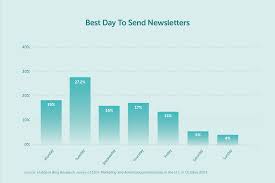
The best time to send a newsletter often depends on your specific audience’s habits and time zones. However, general best practices suggest mid-week mornings (Tuesday, Wednesday, Thursday) are prime times. Analyzing your own subscriber data is key for pinpointing your ideal send schedule. Focusing on delivering value consistently is more important than the exact minute you send.
Understanding When Your Audience Is Ready
Think about your own inbox. When do you tend to check emails more closely? For most people, it’s during the workday.
They might glance at their phone first thing. But then they get busy. Lunchtime offers a quick check.
After work, they might be tired or focused on family.
So, the sweet spot for newsletters is often when people are settling into their day or taking a short break. This gives them a chance to see your email and actually read it. It’s not about shouting into the void.
It’s about finding a quiet moment for your message.
Why Mid-Week Mornings Often Win
Let’s break down why Tuesday, Wednesday, and Thursday mornings tend to work well. Monday is often a catch-up day. People are dealing with emails from the weekend and planning their week.
They might not have time for an extra newsletter.
Friday can be tricky too. People are winding down. They might be thinking about the weekend.
They could be less focused on work-related emails or newsletters. This leaves the middle of the week as a solid choice. People are in their work routine.
They are more likely to engage.
Morning hours are also popular. Many people start their day by checking emails. This means your newsletter could be one of the first things they see.
It gets your message in front of them early. It has a better chance of not getting lost.
The Weekly Rhythm of Email
Monday: Start of the week. People often play catch-up. Less engagement expected.
Tuesday: Routine sets in. People are focused. Good time for emails.
Wednesday: Mid-week. Still in the groove. High engagement potential.
Thursday: Nearing the end of the week. Engagement can still be strong.
Friday: Winding down. Weekend thoughts. Engagement might dip.
Weekend: Varies greatly. Some people check. Others disconnect.
I remember sending out a client’s newsletter on a Friday afternoon once. We usually sent it mid-week. The open rates were noticeably lower.
It was a clear sign that people weren’t as receptive then. It felt like a wasted effort for the team.
That experience taught me that even small shifts in timing can make a big difference. It’s not just about what’s in the email. It’s also about when it arrives in their inbox.
Finding that right moment is part of the strategy.
Considering Your Audience’s Time Zones
This is where things get a little more complex, but it’s super important. If your audience is spread across different time zones, sending at “mid-morning” in your own time zone might mean it lands in the middle of the night for someone else.
Imagine someone in California receiving your email at 9 AM Eastern Time. That’s 6 AM Pacific Time! They might still be asleep or just waking up.
They might not see it until much later, when it’s already buried.
You need to think about where your subscribers actually are. A good tool to use here is your email marketing platform. Most platforms can show you a breakdown of your subscriber locations.
You can often see which time zones have the most people.
Audience Time Zone Check
Step 1: Log into your email service provider.
Step 2: Look for subscriber location data.
Step 3: Identify your largest subscriber groups by time zone.
Step 4: Aim to send when it’s morning or early afternoon for them.
For instance, if you have a large group in the Pacific Time Zone and another in the Eastern Time Zone, you might have to choose. You could send twice. Or you could pick a time that’s a decent compromise for both.
For example, 11 AM Eastern is 8 AM Pacific. That’s early for Pacific but still within waking hours.
I had a friend who ran an online course. Her students were all over the U.S. and even some in Europe.
She struggled with sending announcements. What worked best for her was a bit of testing. She sent at different times to different segments of her list.
She found that a late morning send for the U.S. worked best overall. It was still early enough for the West Coast but not too late for the East Coast.
It’s a balance. You can’t please everyone with a single send time. But you can aim for the largest group or the time that seems to get the most engagement across the board.
It requires a bit of detective work.
Analyzing Your Own Data is Key
While general advice is helpful, your own subscribers are unique. They have their own routines and habits. The absolute best way to find your optimal send time is to look at your past email performance.
Most email marketing services offer robust analytics. You can see metrics like open rates, click-through rates, and unsubscribe rates for each campaign. Often, you can even see these metrics broken down by send time.
Look for patterns. Did a newsletter sent on a Tuesday at 10 AM get a better response than one sent on a Wednesday at 2 PM? Note these down.
Over time, a clear picture will emerge.
Your Data Tells All
Metric to Watch: Open Rate
This shows how many people opened your email. Higher is better.
Metric to Watch: Click-Through Rate (CTR)
This shows how many openers clicked a link. Shows engagement.
Metric to Watch: Conversion Rate
Did the click lead to a desired action? (e.g., purchase)
How to Analyze:
1. Go to your email platform’s analytics.
2. Filter by campaign date and time.
3. Compare performance across different send times.
I recall working with a small business that sold handmade crafts. Their audience was mostly women, many of whom were stay-at-home moms or worked flexible schedules. They initially sent emails mid-week, mid-morning.
The results were okay, but not amazing. When they started experimenting, they found that sending on Wednesday evenings, after kids were in bed, actually performed better!
This completely flipped the common advice. But for their specific audience, it made perfect sense. They weren’t glued to their inboxes during the day.
They had more quiet time later. Their data showed it clearly.
This is why relying solely on generic advice can be a mistake. Your audience might be early birds, night owls, or somewhere in between. Their daily routines dictate when they are most receptive.
Your analytics are your best guide to understanding them.
Experimentation: The Secret Sauce
Once you have an idea of what might work based on general advice and your audience’s demographics, it’s time to test. Don’t just guess and stick with it. Actively experiment.
Here’s a simple way to do it. For your next few newsletters, try sending them at slightly different times or days. Keep everything else the same: the subject line, the content, the audience segment.
The only variable is the send time.
For example:
- Newsletter 1: Tuesday at 9 AM
- Newsletter 2: Wednesday at 10 AM
- Newsletter 3: Thursday at 11 AM
Then, track the results carefully. Which one got more opens? Which one got more clicks?
After a few tests, you’ll start to see a trend. This data will be more valuable than any blog post or tip you read.
It’s like a scientist running an experiment. You change one thing and observe the outcome. Your email list is your laboratory.
Your analytics are your results.
A/B Testing Your Send Time
What is A/B Testing?
Sending two versions of your email (A and B) to different segments of your list to see which performs better. For send time testing, version A might be sent Tuesday 9 AM, and version B on Wednesday 10 AM.
How to Implement:
1. Choose two potential send times.
2. Split your list in half (ensure it’s random).
3. Send Version A to List 1 at Time 1.
4. Send Version B to List 2 at Time 2.
5. Compare open and click rates.
I’ve seen businesses get great results by simply trying out weekend sends. Not everyone wants to read newsletters during the busy week. Some might prefer to catch up on a Saturday morning with a cup of coffee.
It’s about knowing your people.
Don’t be afraid to break the rules, but do it based on data. If general advice says Tuesday morning, but your data screams Saturday afternoon, trust your data. It’s tailored to your audience.
What About Weekends?
Weekends are often seen as a no-go zone for email marketing. The thinking is that people are off work and relaxing. They don’t want to be bothered by emails.
However, this isn’t always true. Some audiences are more engaged on weekends. Think about people who work retail or hospitality, where weekends are their busiest workdays.
They might have more downtime during the week or in the evenings.
For some hobbyist groups, weekends are when they have the most time to pursue their interests. They might be more receptive to content related to those hobbies.
Here’s the catch: weekend engagement can be more variable. Saturday morning might work, but Saturday afternoon might not. Sunday evenings could be a good time as people prepare for the week ahead.
Weekend Email Considerations
Pros:
Less inbox competition from work emails.
Subscribers may have more leisure time.
Cons:
Engagement can be lower for some demographics.
People might be out or busy with social activities.
Test Cases:
Saturday morning (early).
Sunday evening (before the work week starts).
I saw one example where a travel company found their best engagement on Saturdays. People were planning their getaways for the upcoming weeks. Their weekend travel deals or inspiration newsletters did very well.
It wasn’t a surprise once they looked at their customer base. Many of their customers were planning trips during their downtime.
If you’re considering a weekend send, treat it like any other experiment. Send one out and see how it performs compared to your mid-week sends. Don’t assume it will fail.
Let the data guide you.
Industry and Audience Type Matter
The nature of your business and the type of audience you serve play a huge role. What works for a B2B software company will likely be very different from what works for a fashion blog or a parenting group.
B2B (Business-to-Business): Typically, weekdays during business hours are best. People are at their desks, checking emails for work. Early to mid-week mornings are often the sweet spot.
Avoid sending on weekends or late Friday afternoons.
B2C (Business-to-Consumer): This is more varied. Consider your customer’s lifestyle. Retail/E-commerce: Mid-week mornings, lunch breaks, and sometimes evenings can work.
People shop at various times. Lifestyle/Hobby Blogs: Weekends or evenings might be good when people have leisure time. Parenting/Family-focused: Early mornings or late evenings when kids are asleep might be best.
Students: Mid-day breaks or evenings.
Industry Snapshot: Send Time Guides
Industry: B2B Software
Best Bets: Tuesday–Thursday, 9 AM–11 AM (Recipient’s Time Zone)
Reason: Business focus, planning, decision-making.
Industry: E-commerce (Fashion)
Best Bets: Wednesday–Thursday, 10 AM–2 PM, or Tuesday Evening
Reason: Shopping during breaks or after work.
Industry: Parenting Blog
Best Bets: Monday–Wednesday Evenings, 7 PM–9 PM
Reason: Quiet time after family duties.
I worked with a tech newsletter that targeted IT professionals. They found that sending at 7 AM Eastern Time consistently brought in the highest open rates. This was because many of these professionals started their day very early, checking systems and emails before the typical 9-to-5 rush.
Their data was very specific and showed this early bird trend.
The key is to always think about your specific audience. Who are they? What do they do?
When are they most likely to have a moment to read an email? Put yourself in their shoes.
Timing Your Newsletter Content
Beyond the actual send time, consider the timing of the content itself. Does it relate to a holiday? A current event?
A season?
If you’re sending out holiday gift guides, you need to send them well in advance. People start planning and shopping early. Sending a Christmas gift guide on December 20th is likely too late.
Similarly, if you’re discussing a seasonal topic, like gardening tips, you want to send that out when people are thinking about gardening. That’s typically in the spring, not the middle of winter.
This is less about the clock and more about the calendar. It requires foresight and planning your content around real-world events and seasons.
Content Timing Checklist
Is the content seasonal?
Send before the season begins.
Is the content related to a holiday?
Send early to capture planning and shopping.
Is the content time-sensitive (e.g., event, sale)?
Send close to the event but allow time for action.
Is the content evergreen (always relevant)?
Focus on general best send times.
I learned this lesson the hard way with a Back-to-School campaign. We sent out emails with school supply lists and tips in late August. The response was okay, but many parents had already done their shopping.
We realized we should have started sending that content in early August, or even late July, to give people more time to prepare and budget.
This kind of timing is crucial for making sure your message arrives when it’s most relevant and useful to your audience. It makes your email feel less like an interruption and more like a helpful resource.
The Role of the Subject Line
While we’re talking about timing, don’t forget the subject line. A great subject line can significantly impact whether your email is opened, regardless of when it’s sent. If the subject line is boring or unclear, people might skip it even if it arrives at the “perfect” time.
Your subject line should be compelling. It should create curiosity or clearly state the value inside. A/B testing your subject lines is just as important as testing your send times.
Here are some quick tips for subject lines:
- Keep it short and clear.
- Personalize it if possible (e.g., using the subscriber’s name).
- Create a sense of urgency or scarcity (use sparingly).
- Ask a question to spark curiosity.
- Highlight a key benefit or offer.
Subject Line Power-Ups
Bad Example: Newsletter
Good Example: Your Weekly Marketing Tips Inside!
Bad Example: Sale Info
Good Example: ⚡ Flash Sale: 50% Off Ends Tonight!
Bad Example: Update
Good Example: , Did You See This Amazing News?
I once saw a subject line that simply said, “Don’t Open This Email.” Of course, people were curious and opened it! It was a clever tactic for a specific audience. While not always suitable, it shows how a subject line can grab attention.
The content inside then needs to deliver on that promise (or playful misdirection).
A strong subject line paired with an optimized send time is a powerful combination. They work together to maximize your chances of getting your message seen and read.
Common Pitfalls to Avoid
Even with all this information, it’s easy to fall into common traps. One of the biggest is assuming a “one size fits all” approach. What works for Mailchimp’s general advice might not work for your niche audience.
Another pitfall is not analyzing your data at all. You might be sending at a time that seems logical to you but is ineffective for your subscribers. Without looking at the numbers, you’ll never know.
Sending too often or too infrequently can also hurt engagement, regardless of timing. Consistency is key. Find a schedule that works for your audience and stick to it.
Newsletter Timing Mistakes
Mistake 1: Ignoring Your Data
Relying on generic advice without checking your own performance.
Mistake 2: Assuming Everyone is the Same
Not considering audience demographics and time zones.
Mistake 3: Sending Irregularly
Inconsistent send schedules confuse subscribers.
Mistake 4: Overlooking Content Relevance
Sending content that isn’t timely or relevant to the season/event.
Mistake 5: Forgetting the Subject Line
A weak subject line can doom even a perfectly timed email.
I’ve seen many well-meaning marketers get discouraged because their newsletter isn’t performing. They might be doing everything else right – great content, good design – but they’re missing the mark on timing. It’s a subtle but critical factor.
The goal isn’t to be perfect from day one. It’s to be observant, to test, and to learn. Over time, you’ll develop a sending schedule that works like a charm for your specific audience.
When to Send: A Quick Recap
So, to bring it all together, what’s the general wisdom? Most experts suggest:
- Mid-week: Tuesday, Wednesday, Thursday.
- Morning: Around 9 AM to 11 AM in your target audience’s time zone.
But remember, this is just a starting point. Your own data, your audience’s habits, and your industry will ultimately tell you the real best time.
Real-World Scenarios
Let’s look at a few specific examples to solidify these ideas.
Scenario 1: A Local Bakery Newsletter
Audience: Local residents, many of whom are busy parents or workers.
Likely Best Time: Tuesday or Wednesday morning, around 8 AM–10 AM. People might be thinking about breakfast treats or planning their day. Or perhaps Wednesday evening, when they’re planning weekend treats.
Scenario 2: A Tech Startup’s Blog Updates
Audience: Developers, engineers, tech enthusiasts.
Likely Best Time: Tuesday or Thursday, 10 AM–12 PM. These are often active work hours for this demographic. They might check for industry news during breaks.
Scenario 3: A Hobbyist Model Train Enthusiast Blog
Audience: People with a dedicated hobby, likely with free time on weekends.
Likely Best Time: Saturday morning, around 9 AM–11 AM. This is when they might have dedicated time for their hobby, including catching up on related news.
Quick Scan: When to Send?
General Rule: Mid-week mornings.
Your Data: Always check analytics for your specific audience.
Time Zones: Target the majority of your subscribers.
Industry: B2B vs. B2C has different needs.
Audience Lifestyle: Think about their daily routines.
Content: Is it timely or evergreen?
These are just examples. The key is that you have to look at your own situation. There’s no magic bullet time that works for everyone.
It’s a personalized journey.
What This Means for Your Newsletter Strategy
Understanding the best time to send your newsletter isn’t just about getting more opens. It’s about respecting your subscribers’ time and meeting them when they are most receptive. When you send at the right time, your newsletter feels more like a welcomed guest than an interruption.
This leads to better engagement. Better engagement means your message has a higher chance of being read, clicked, and acted upon. It builds a stronger connection with your audience.
It helps you achieve your newsletter goals, whether that’s driving traffic, making sales, or building community.
Don’t stress too much about finding the perfect minute. Focus on finding a consistent, effective window. And remember that “effective” is defined by your own subscriber data.
Quick Fixes and Tips
Here are some actionable tips to help you find your best send time:
- Start with the general rule: Mid-week mornings.
- Check your analytics: Look for patterns in open and click rates.
- Segment your list: If you have distinct audience groups, test times for each.
- A/B test send times: Run controlled experiments to see what works.
- Be consistent: Once you find a good time, stick to it.
- Consider content relevance: Time your sends around holidays or events.
- Don’t forget the subject line: A good subject line is crucial.
Your Action Plan:
Step 1: Review your past 10 newsletters in your analytics.
Step 2: Note the send day and time for each.
Step 3: Note the open and click-through rates.
Step 4: Look for any trends (e.g., Tuesdays always perform better).
Step 5: Plan your next test send based on this initial data.
It’s a continuous process of learning and refining. The more you pay attention, the better you’ll become at reaching your audience effectively.
Frequently Asked Questions
-
What is the absolute best time to send a newsletter?
There’s no single “absolute best” time that works for everyone. However, general research suggests Tuesday, Wednesday, and Thursday mornings, between 9 AM and 11 AM in your audience’s local time zone, often see high engagement. Your own subscriber data will provide the most accurate answer.
-
Should I send my newsletter on Mondays?
Mondays can be tricky. Many people are catching up on emails from the weekend and planning their week. Engagement might be lower.
It’s often better to wait until Tuesday, when people are more settled into their routine.
-
Is it ever good to send newsletters on weekends?
Yes, for some audiences, weekends can work well. This is especially true for hobbyists or people in industries where weekends are active workdays. Saturday mornings or Sunday evenings are potential times to test, but always monitor your specific engagement data.
-
How do I know my subscribers’ time zones?
Most email marketing platforms provide subscriber location data. You can often see a breakdown of where your subscribers are located. This information is crucial for sending at a time that’s convenient for them, not just for you.
-
How often should I send my newsletter?
Frequency depends on your audience and the value you provide. Most businesses find success with weekly or bi-weekly newsletters. The key is consistency.
Sending too often can lead to unsubscribes, while sending too rarely can cause subscribers to forget about you.
-
What if my audience is global?
If you have a global audience, you’ll need to make strategic choices. You could prioritize the time zone with the largest segment of your subscribers. Alternatively, you might consider sending two separate campaigns at optimal times for different major time zones, if your platform allows and it makes sense for your content.
Conclusion
Finding the right time to send your newsletter is a blend of smart strategy and careful observation. Start with the common wisdom, but always let your own subscriber data guide your decisions. Experiment, track, and refine.
Your audience will thank you for reaching out when they are most ready to hear from you.